

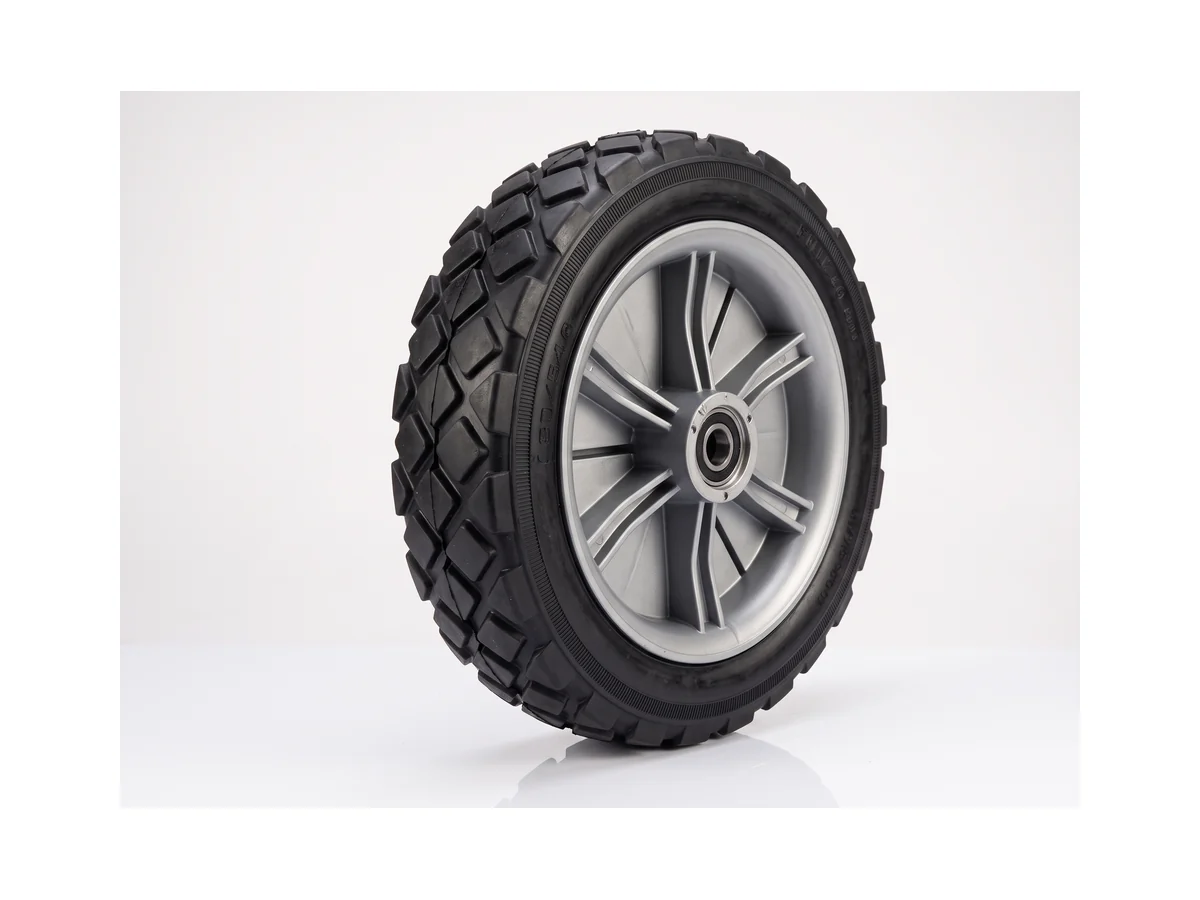
A flat-free wheel is a wheel designed to operate without the air-pressure failures associated with a conventional pneumatic tire. It may use cellular polyurethane foam, solid rubber, or another non-pneumatic construction. The commercial value is simple: the equipment can keep moving without stopping for inflation, tube replacement, or puncture repair.
Why buyers use flat-free wheels
Air-filled tires provide useful cushioning, but they can lose pressure through punctures, valve problems, damaged tubes, or long storage. Flat-free wheels remove those failure points. They are common on wheelbarrows, garden carts, hand trucks, utility equipment, service equipment, and other low-speed applications.
The benefit is not limited to punctures. A fleet manager may choose flat-free wheels because different operators do not consistently check tire pressure. A distributor may use them as a premium replacement option for customers who prefer lower maintenance.
Common constructions
PU foam wheels
Cellular polyurethane can imitate part of the cushioning feel of an inflated tire while remaining non-pneumatic. Tread, density, hub, and bearing arrangements vary by model.
Solid rubber wheels
Solid rubber wheels use a dense rubber tire. They are durable and simple, but normally provide less cushioning than pneumatic or foam-filled alternatives.
Semi-pneumatic designs
Some tires contain molded air cavities but do not require inflation. Their performance depends on tire geometry and rubber compound.
Specifications that determine fit
The phrase "flat-free" does not define compatibility. A buyer should confirm:
- Overall wheel diameter and tread width
- Hub length and hub material
- Bore diameter, bearing type, or bushing arrangement
- Axle size and mounting method
- Offset and equipment clearance
- Expected static and working load
- Surface conditions and operating temperature
Two wheels with the same nominal diameter may not fit the same axle or fork.
Performance tradeoffs
Flat-free wheels reduce maintenance, but they are not automatically best for every application. A pneumatic tire may provide softer shock absorption on rough terrain. A solid wheel may have higher rolling resistance or transmit more vibration. A foam wheel may weigh more than an air-filled equivalent.
Selection should start with the equipment and working environment, not with a generic claim that one construction is always superior.
How to prepare a sourcing request
Provide a clear photo of the current wheel and record diameter, width, hub length, bore or bearing dimensions, axle size, load, surface, quantity, and destination market. If the wheel must match an existing machine, a drawing or physical sample reduces fitting risk.
FAQ
Does flat-free mean the tire can never be damaged?
No. It means the wheel does not fail through loss of inflation pressure. Tread wear, overloading, hub damage, bearing wear, and severe physical damage can still occur.
Are all flat-free wheels made from PU?
No. Products may use PU foam, solid rubber, semi-pneumatic rubber, or other constructions. Confirm the material and structure with the supplier.