

Injection mold development converts a product design into repeatable production tooling. The work combines product review, mold engineering, machining, fitting, sampling, measurement, adjustment, and approval. Each project differs, but the main decision points are consistent.
Product and feasibility review
The process begins with controlled 3D and 2D files, product function, material, appearance, tolerances, expected volume, and production requirements. The manufacturer reviews draft, wall thickness, ribs, bosses, undercuts, parting line, ejection, gate options, cooling, shrinkage, and likely molding risks.
Questions should be resolved before steel is cut. A small design decision can affect sliders, inserts, visible surfaces, cycle behavior, and future maintenance.
Mold concept and design
The mold design defines cavity and core, parting surfaces, feed system, ejection, cooling, venting, inserts, sliders or lifters, mold base, and interfaces with the intended molding equipment. The design should reflect product requirements and expected production, not only the shape of the part.
The buyer and manufacturer should agree on review and approval responsibilities. Changes must be controlled by revision.
Material preparation and machining
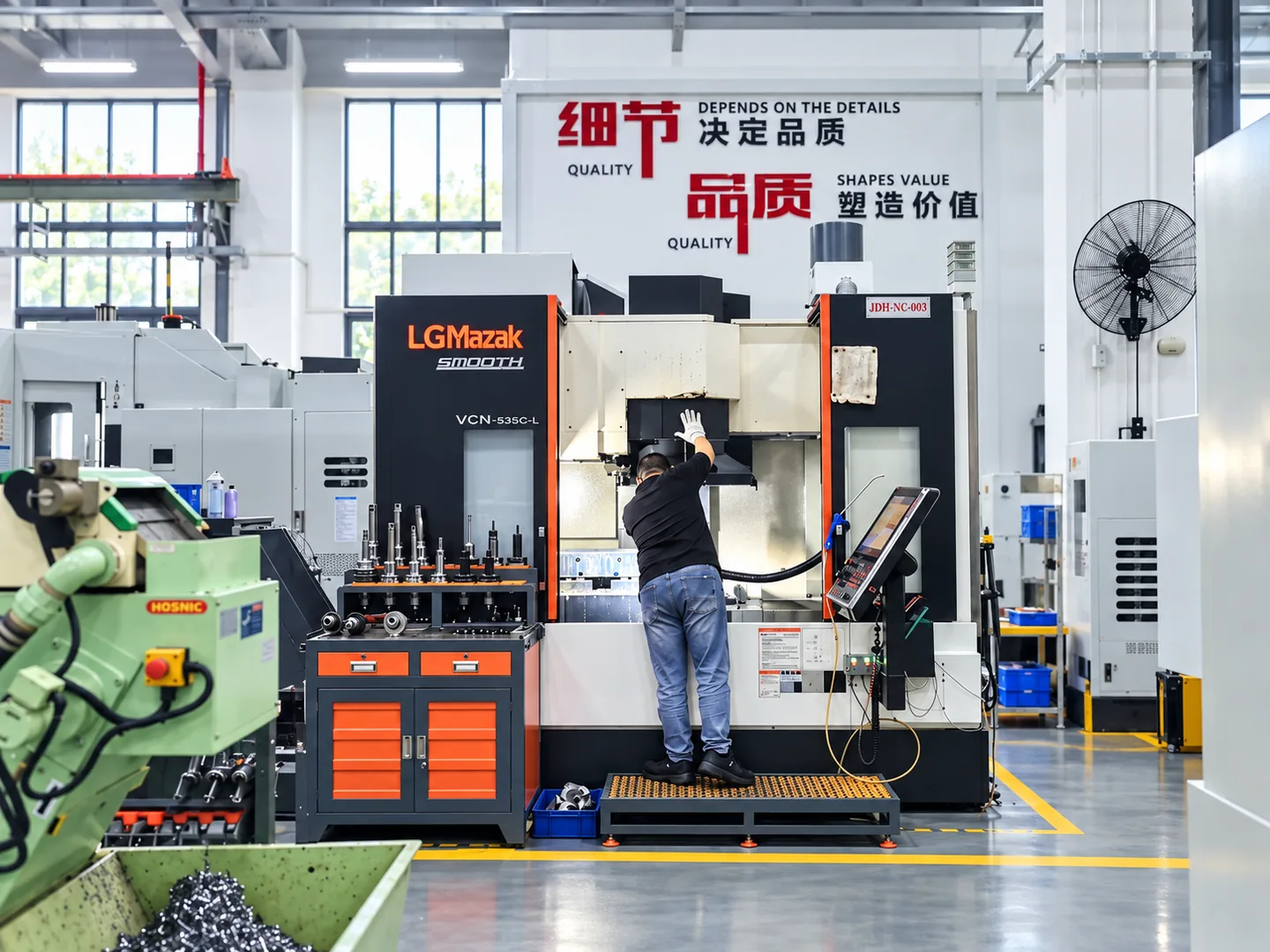
Mold components are prepared and machined through suitable operations. CNC machining is used for many core, cavity, plate, and insert features. Additional processes may be required according to geometry, accuracy, finish, and mold construction.
Machining is one stage of mold manufacturing, not a substitute for mold engineering, fitting, and validation.
Assembly and fitting
Machined components are inspected, assembled, and fitted. Moving mechanisms, shutoffs, slides, lifters, ejection, cooling connections, and mold operation are reviewed. Surface finishing or texture requirements are completed at the appropriate stage.
Trial molding
The first trial checks whether the mold operates and produces parts. The team reviews filling, gate behavior, flash, short shots, sink, deformation, weld lines, ejection, appearance, dimensions, and cycle stability. Process conditions should be recorded so findings are not separated from the way the sample was produced.
Correction and validation
Feedback may lead to process adjustment, mold correction, or product design change. These are different actions and should be documented. Samples are then rechecked against dimensions, assembly, appearance, function, and agreed validation requirements.
Production readiness and maintenance
Before production, confirm approved files, sample status, inspection points, process records, spare or wear parts where required, packing, and maintenance responsibilities. Tooling needs cleaning, inspection, lubrication, storage, and repair throughout its working life.
Buyer checkpoints
- Controlled product files and revision
- Approved mold concept and responsibilities
- Material and appearance requirements
- Trial report and sample identification
- Dimensional and functional feedback
- Documented corrections
- Final approved sample or specification
- Production and maintenance plan
The best results come from early communication and disciplined change control rather than trying to solve every issue after the first sample.
Information a useful trial report should retain
A trial report becomes more valuable when it connects each sample to the mold revision, product revision, resin, color, machine, key process conditions, and observed result. Samples from different trials should be labeled so dimensional or appearance feedback is not applied to the wrong version. The report should separate confirmed defects from preferences and identify whether each response is a process adjustment, tooling correction, design proposal, or further test.
Buyers should also distinguish mold acceptance from product acceptance. A mold may operate reliably while a part still needs functional validation, and a visually acceptable part may still require dimensional or assembly review. Agreeing on those gates before the first trial creates clearer decisions and prevents an informal photo approval from becoming the only production release record.