A prototype can demonstrate shape, assembly, or function, but it does not automatically prove that a product is ready for injection molding. The path to mass production requires design control, manufacturing review, tooling, representative samples, validation, and stable production preparation.
Define what the prototype proves
Different prototypes answer different questions. A visual model may confirm appearance. A machined or printed part may check assembly. A functional prototype may support tests, but its material and manufacturing behavior can differ from an injection-molded part.
Document what has been validated and what remains uncertain. Do not treat every prototype dimension as final without reviewing the intended molding process.
Freeze the product requirement
Prepare controlled 3D and 2D files, material requirements, critical dimensions, tolerances, appearance, color, inserts, secondary operations, assembly, tests, packing, and target quantity. Identify the revision used for quotation and mold design.
Late changes are sometimes necessary, but uncontrolled changes create cost, timing, and quality risk.
Design for injection molding
Review draft, wall thickness, ribs, bosses, corners, undercuts, parting line, gate area, ejection, shrinkage, sink, weld lines, and deformation risk. The goal is not to remove every design feature; it is to understand how product requirements interact with molding and tooling.
Develop and sample the mold
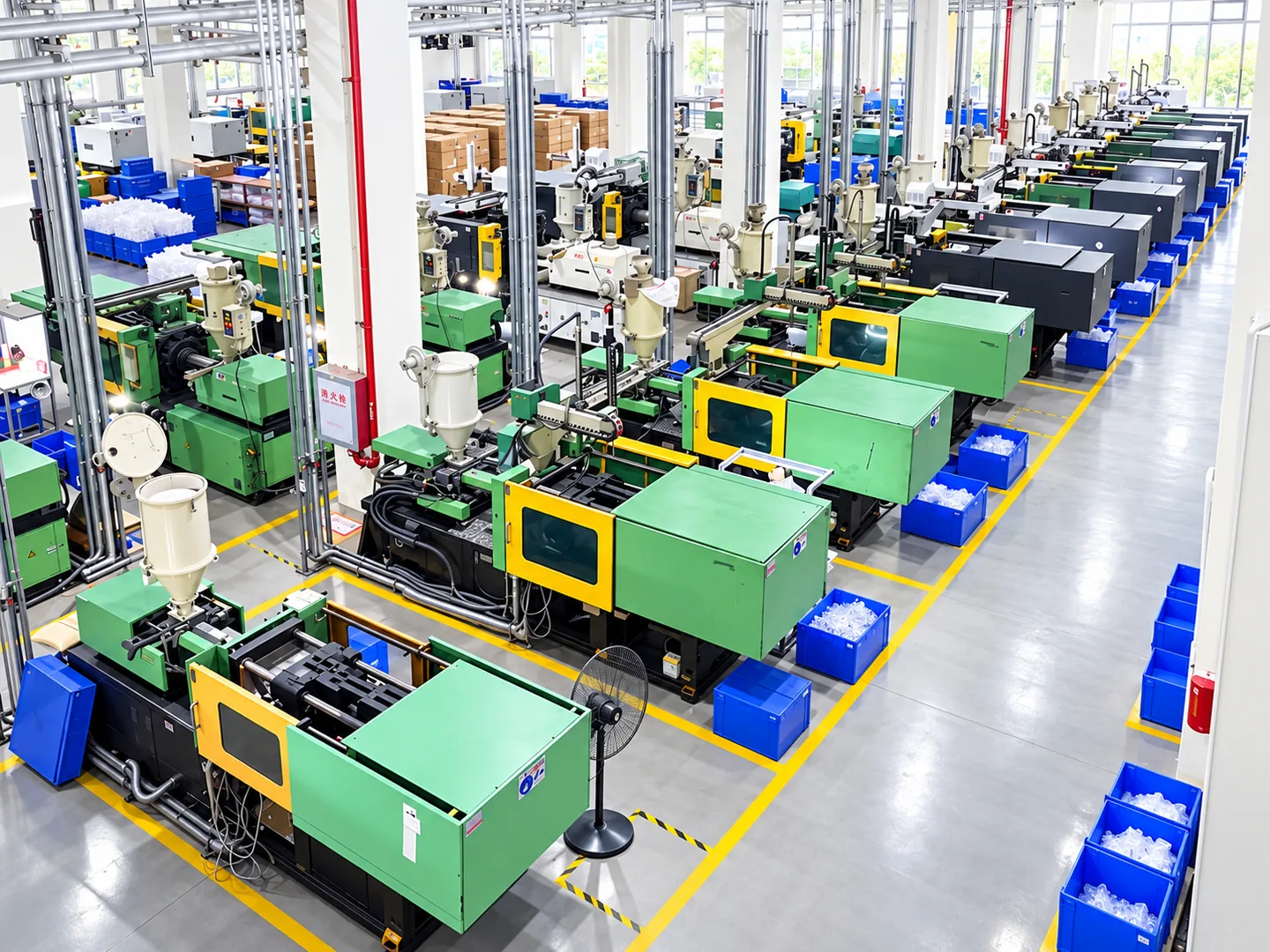
After mold design and manufacturing, trial molding produces representative parts. The first sample is a learning stage. Review dimensions, assembly, function, surface, color, molding defects, and process stability. Record the sample revision and molding conditions.
Corrections may involve the process, mold, or product. The team should identify the cause before deciding the action.
Pilot production
A pilot or limited production run helps confirm repeatability, inspection flow, assembly, secondary operations, packing, cycle behavior, and handling. It can reveal issues that are not visible in a small sample set.
The appropriate pilot scope depends on product complexity and business risk. Avoid inventing a universal quantity.
Mass-production readiness
Before release, confirm:
- Approved product files and reference samples
- Material, color, and supplier requirements
- Critical inspection points and records
- Stable process window and work instructions
- Assembly and secondary operations
- Packaging, labels, and destination requirements
- Change-control and traceability expectations
- Mold maintenance and production planning
Communication after launch
Mass production is not the end of engineering control. Material changes, mold repair, process adjustment, design revisions, and packaging changes should be reviewed and documented. Feedback from production and the market can guide controlled improvement.
Practical conclusion
Moving from prototype to production is a sequence of risk-reduction steps. The buyer brings clear product and market requirements; the manufacturer contributes manufacturing review, tooling, sampling, process preparation, and production feedback. Clear approvals and controlled revisions connect those responsibilities.
A practical production-release record
The release package should identify the approved drawing and CAD revision, material and color reference, accepted sample, critical inspection points, assembly or functional checks, packaging specification, and any approved deviations. It should also record open actions that do not block production, with an owner and review date. This prevents teams from relying on separate email threads or unlabeled samples when a repeat order begins months later.
Production readiness should be judged against the product's actual risk. A cosmetic enclosure, a load-bearing component, and a part that interfaces with several supplied assemblies do not require identical validation. The buyer remains responsible for defining market and end-use requirements, while the manufacturer should explain what the tooling and molding trials demonstrate. When those boundaries are explicit, pilot production becomes a controlled confirmation step rather than an attempt to discover the original requirements after tooling is complete.