

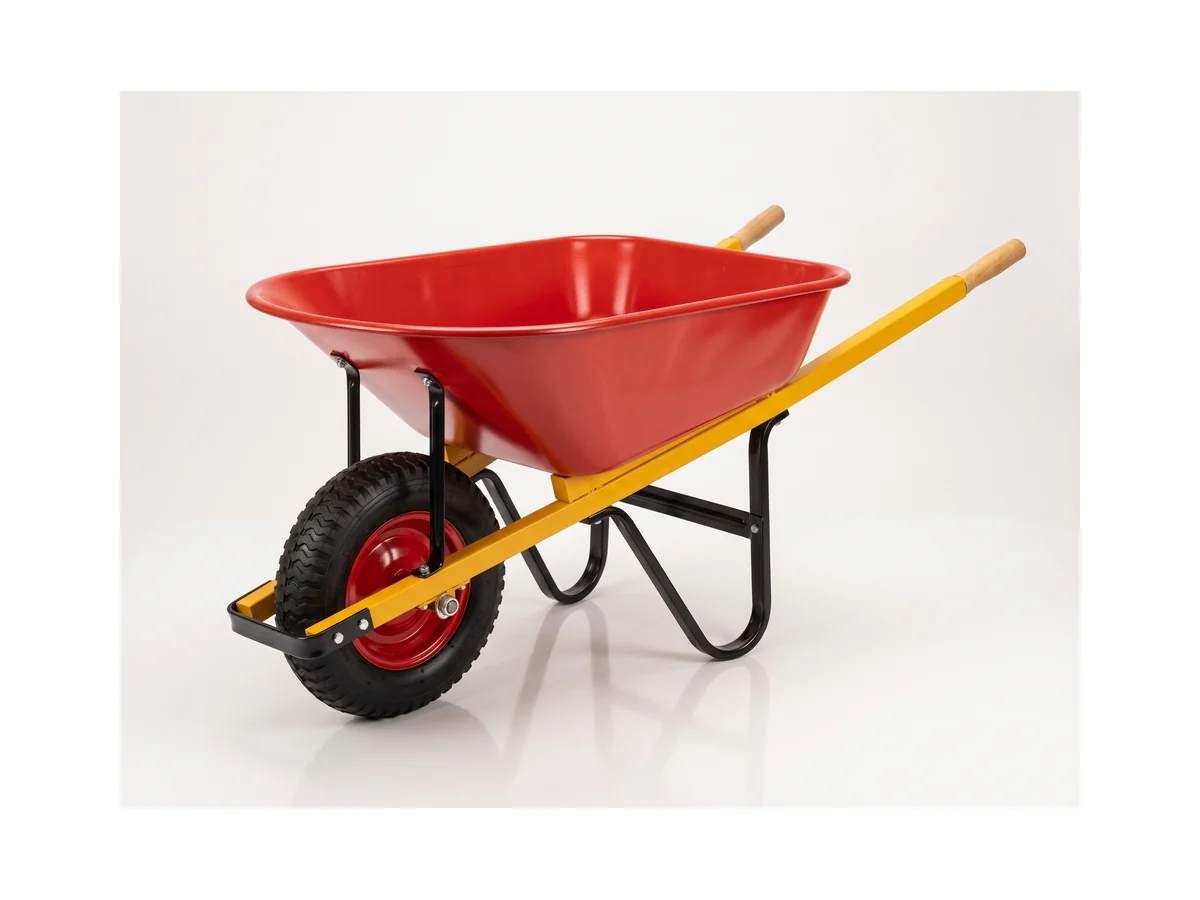
Choosing a wheelbarrow wheel is not only a question of diameter. A replacement wheel must fit the frame, carry the expected load, roll on the intended surface, and match the buyer's maintenance priorities.
Start with the existing fit
Measure the overall diameter, tread width, hub length, axle diameter, and the distance available between the wheelbarrow forks. Identify whether the wheel uses bearings, bushings, or a plain bore. Record any spacers and the position of the hub relative to the tire centerline.
Nominal labels can be useful, but direct measurements and photos are safer when replacing an existing wheel.
Choose the tire construction
Pneumatic
Pneumatic wheels offer strong cushioning on soil, gravel, building sites, and uneven garden surfaces. They require correct inflation and can puncture.
PU foam or flat-free
Flat-free wheels reduce downtime and eliminate pressure checks. They suit maintenance-sensitive applications and areas with sharp debris. Confirm load and rolling characteristics because construction varies.
Solid rubber
Solid rubber wheels are durable and simple. They can be suitable on firm surfaces, but normally transmit more vibration than pneumatic tires.
Match the wheel to terrain
A wider tire can spread load on soft soil, while a narrower tire may roll efficiently on firm surfaces. Tread pattern affects grip and mud release. For construction work, puncture exposure may favor a flat-free option. For rough landscaping, cushioning may favor a pneumatic design.
Consider load and handling
The wheel carries a large share of the payload, but actual load distribution changes while the operator lifts and moves the barrow. Do not select only from tray capacity. Confirm the wheel's intended working load and include the weight of the wheelbarrow itself.
An oversized or heavy wheel can also alter balance, handle height, and frame clearance.
Buying checklist
- Wheel diameter and width
- Hub length, bore, bearing, and axle dimensions
- Tire construction and tread
- Load requirement
- Indoor or outdoor use
- Surface and puncture conditions
- Required color or hub configuration
- Order quantity, packing, and destination
Replacement versus OEM sourcing
For replacement programs, provide an existing wheel, drawing, or full dimensional record. For a new wheelbarrow program, evaluate the wheel together with frame geometry, tray capacity, intended market, and packaging. This avoids selecting a wheel that fits on paper but creates poor balance or shipping inefficiency.
FAQ
Can a flat-free wheel replace a pneumatic wheel?
It can when dimensions, load, clearance, and axle arrangement match. Compare actual specifications before ordering.
What information should I send for a quotation?
Send wheel dimensions, hub and axle details, photos or drawings, tire preference, load, application, quantity, and destination market.
How should a buyer evaluate a sample?
Install the wheel on the intended frame and check side clearance, axle fit, hub alignment, handle height, and balance with a representative load. Move the barrow on the actual surface, including turns, slopes, thresholds, and soft ground where relevant. A wheel that spins freely without load may behave differently when the tray is full. Also inspect tire seating, bearing or bushing fit, axle retention, and any contact between the tire and frame.
For repeat orders, record the approved dimensions, hub construction, tire type, tread, color, and packing reference. A photograph alone is not a complete specification, while a nominal tire marking may describe only part of the assembly. Keeping an approved sample and dimensional record reduces uncertainty when the same replacement wheel is ordered again.