

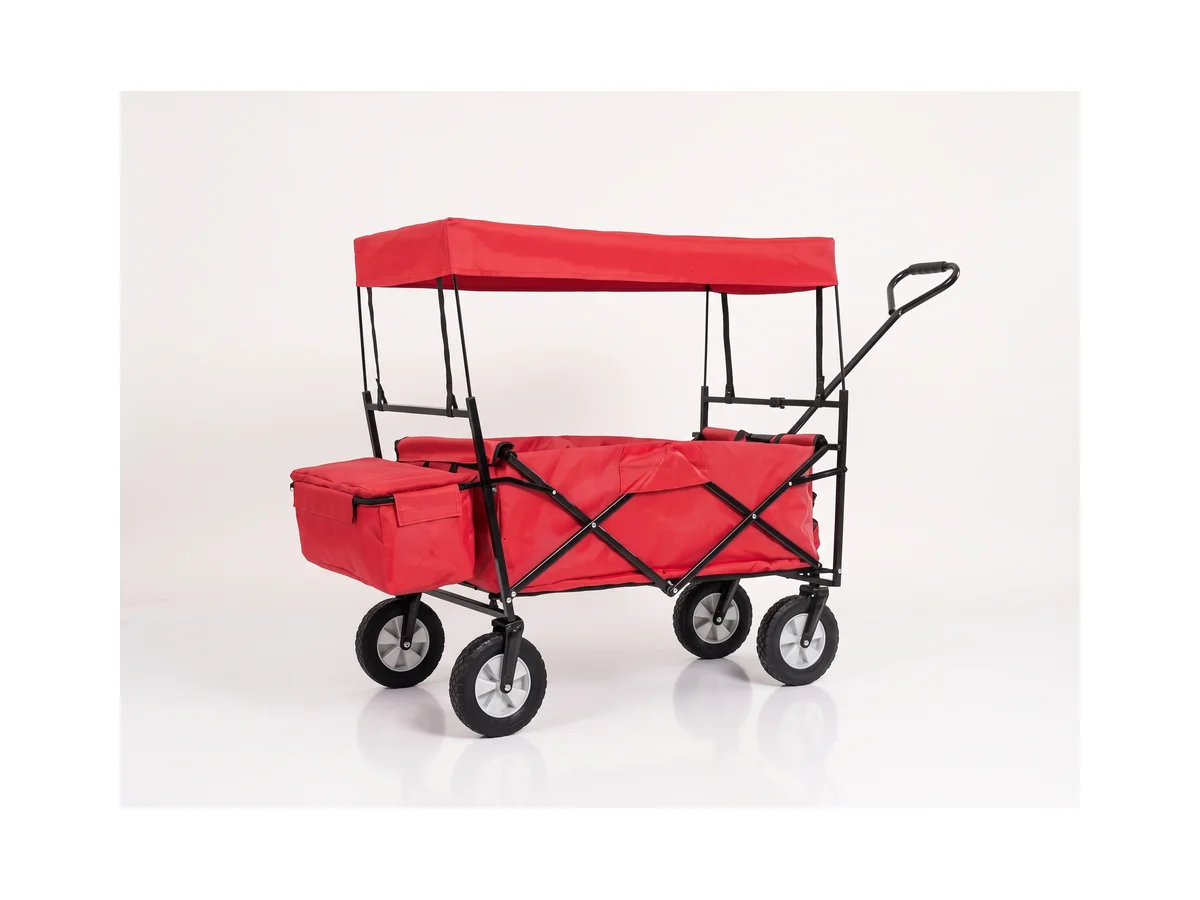
A foldable wagon combines useful cargo space with a frame that collapses for storage and transport. It can be a practical choice when a rigid cart takes up too much room, but wagons that look similar may differ considerably in load behavior, wheel performance, fabric quality, handle control, and folding convenience. Buyers should compare the complete product rather than choosing only by capacity or folded appearance.
This guide explains the main decisions for garden, utility, shopping, camping, and light cargo applications. For current product availability, visit the Foldable Wagons category.
What is a foldable wagon?
A foldable wagon is a four-wheel cargo carrier with a collapsible frame and a flexible or removable body. Most designs use a pull handle and fold inward so the wagon can be placed in a vehicle, storeroom, garage, or retail package with less space than a fixed cart.
The folding feature does not define the complete performance of the wagon. Frame geometry, joints, wheel mounting, fabric support, handle connection, and the distribution of the load all affect how the product works in real conditions. A compact folded size is helpful only when the wagon remains stable and easy to control when opened.
Common applications
Garden use
Garden wagons can carry plants, soil bags, hand tools, pots, or general supplies. Outdoor routes may include grass, paving joints, gravel, and uneven paths, so wheel diameter and tread matter. Buyers should also consider whether soil and moisture can be cleaned from the body material.
Camping and outdoor activities
For camping, a wagon may transport tents, coolers, chairs, and equipment between a vehicle and a campsite. The route can be longer than a normal household task. Handle comfort, wheel rolling resistance, frame stability, and the folded package are therefore important.
Shopping and utility work
A compact wagon can support groceries, event supplies, market goods, or household items. For these uses, maneuverability around doors and vehicles may matter more than maximum nominal capacity. Confirm the open width, turning space, handle range, and whether the wagon remains upright during loading.
Tool and cargo transport
Foldable wagons can move boxed tools and light cargo where a fixed platform truck is unnecessary. Concentrated loads require careful review because a high total capacity does not automatically mean the fabric floor supports a small, heavy object without additional reinforcement.
Key factors when choosing a foldable wagon
Load capacity and load distribution
Ask how the stated load is tested and whether it applies to static or moving use. Record the typical cargo weight, dimensions, and center of gravity. Long or top-heavy loads can change steering and stability even when the total weight is below the nominal rating.
Frame material and joints
Steel frames are common because they provide strength at a practical cost. Review tube dimensions, joint design, cross supports, fasteners, weld quality, coating, and the points that move during folding. The folding mechanism should open and close consistently without excessive play or exposed pinch points.
Wheel type
Wheel diameter, width, tread, hub, bearing, and material influence rolling effort and control. Wider wheels may work better on soft ground, while compact wheels can suit smooth floors and smaller folded packages. Check front-wheel steering geometry and clearance between the wheels, frame, and fabric body.
For additional selection guidance, see How to Choose the Right Wheel for a Wheelbarrow.
Folding mechanism
The operator should be able to identify when the wagon is fully opened and ready for loading. Review locking points, pull straps, hinges, and how the folded wagon stays closed. Repeated-cycle testing is more useful than opening a sample only once.
Fabric and body material
Compare fabric weight, coating, seam construction, attachment points, floor reinforcement, cleaning method, and colorfastness requirements. A removable body may simplify cleaning or replacement, but its fasteners should remain secure during use.
Handle design
Handle length and angle affect pulling posture and steering. Check grip comfort, extension or locking functions, connection strength, and whether the handle drops onto the ground when released. The handle should not interfere with folding or vehicle storage.
Storage size
Confirm both open and folded dimensions. Buyers should also check packed dimensions because wheels, handles, covers, and accessories may affect carton size. For retail and e-commerce programs, package protection and assembly instructions can be as important as the folded wagon itself.
OEM and ODM customization options
Depending on the model and order requirements, customization may include frame color, fabric color, printed branding, labels, packaging, wheel configuration, accessories, and selected structural details. Changes that affect the frame, loading, folding system, or tooling require technical review rather than a simple color confirmation.
Provide target use, load, open and folded dimensions, wheel requirements, branding files, packaging expectations, quantity, and destination market. Projects based on a drawing, sample, or new concept can be discussed through Kaihang's OEM and ODM custom manufacturing process.
Why source from Qingdao Kaihang Tools?
Qingdao Kaihang Tools supplies wheelbarrows, carts, wheels, and material-handling products for overseas customers. Product review can connect the wagon frame, wheel choice, molded components, branding, packaging, and production requirements within one sourcing discussion. In-house injection molding and mold support are available for approved projects when custom plastic components or tooling changes are required.
Conclusion
The right foldable wagon should match the real load, route, storage space, and user expectations. Compare frame construction, wheel behavior, folding reliability, body material, handle control, and packed dimensions together. A clear RFQ and a representative sample review help prevent a compact-looking wagon from becoming difficult to pull, unstable, or unsuitable for the intended cargo.
When requesting a quotation, include the application, expected load, cargo size, surface conditions, preferred wheel type, open and folded dimensions, quantity, destination, branding, and packaging requirements.